

Life Expectancy Shows Encouraging Increases on the West Side
In just two years, the COVID-19 pandemic erased almost a decade of global progress in life expectancy. Although life expectancy began to rebound in 2022 as COVID-related deaths declined, recovery has been slow and uneven, especially in communities that were already experiencing health and economic inequities.
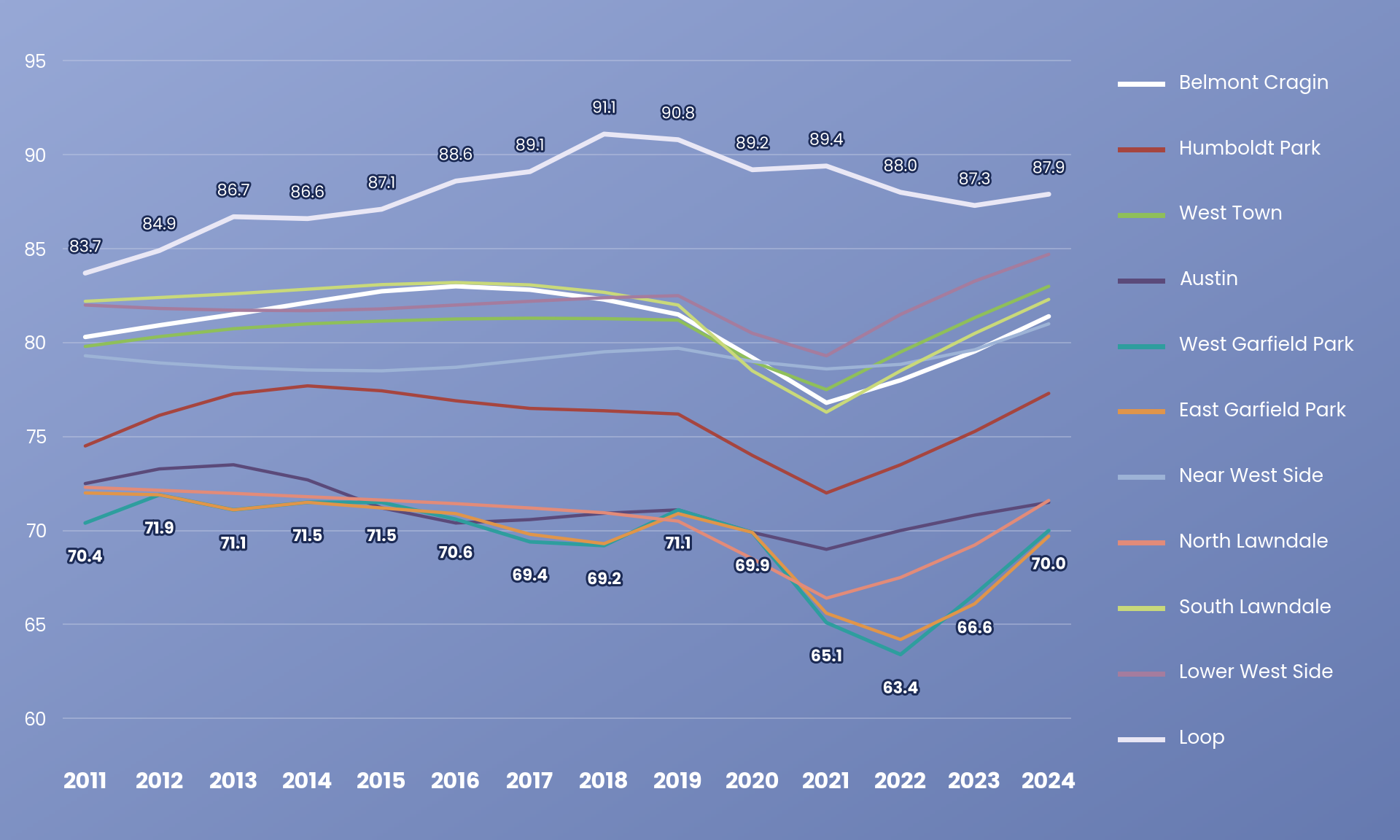
New data brings encouraging news for the West Side. From 2023 to 2024, life expectancy increased in every West Side neighborhood, with an average increase of 1.7 years. These findings show that our communities are recovering from the life expectancy drop during the COVID-19 pandemic and may also be making meaningful improvements in health outcomes. However, there is still much more work to do.
In just two years, the COVID-19 pandemic erased almost a decade of global progress in life expectancy [1]. Although life expectancy began to rebound in 2022 as COVID-related deaths declined, recovery has been slow and uneven, especially in communities that were already experiencing health and economic inequities [2].
COVID-19 Hit Some Communities Harder Than Others
COVID-19 reached every part of Chicago, but its impact wasn’t shared equally. South and West Side communities already facing higher rates of chronic diseases and greater barriers to healthcare experienced some of the largest declines in life expectancy across the City.
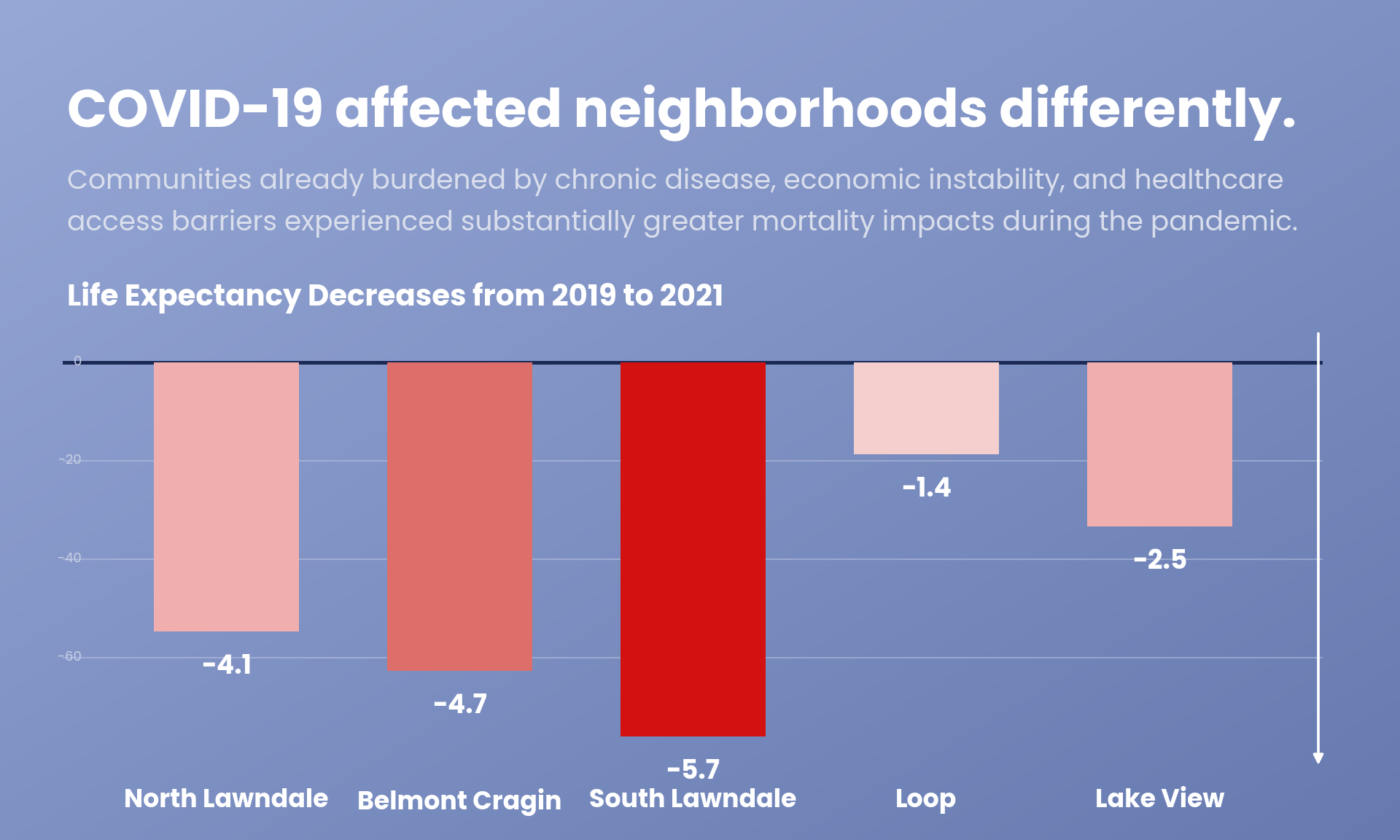
From 2019 to 2021, life expectancy dropped by 5.7 years in South Lawndale, 4.7 years in Belmont Cragin, and 4.1 years in North Lawndale. During the same period, the decline was 1.4 years in the Loop and 2.5 years in Lakeview.
These differences reflect more than the effects of one single pandemic; the COVID-19 pandemic placed its heaviest burden on communities that were already struggling with the inequities created by historical disinvestment.
West Side’s Recovery Stands Out
The West Side's recent progress is part of the broader recovery from COVID-19, but the size and consistency of the gains stand out. West Side neighborhoods experienced some of Chicago's largest declines in life expectancy during the pandemic, giving them more lost ground to recover. Even so, from 2021 to 2024, life expectancy increased in every West Side neighborhood, with an average gain of 4.4 years. That is almost twice the 2.6-year increase seen nationally; and during the same period, life expectancy in the Loop decreased by 1.5 years.
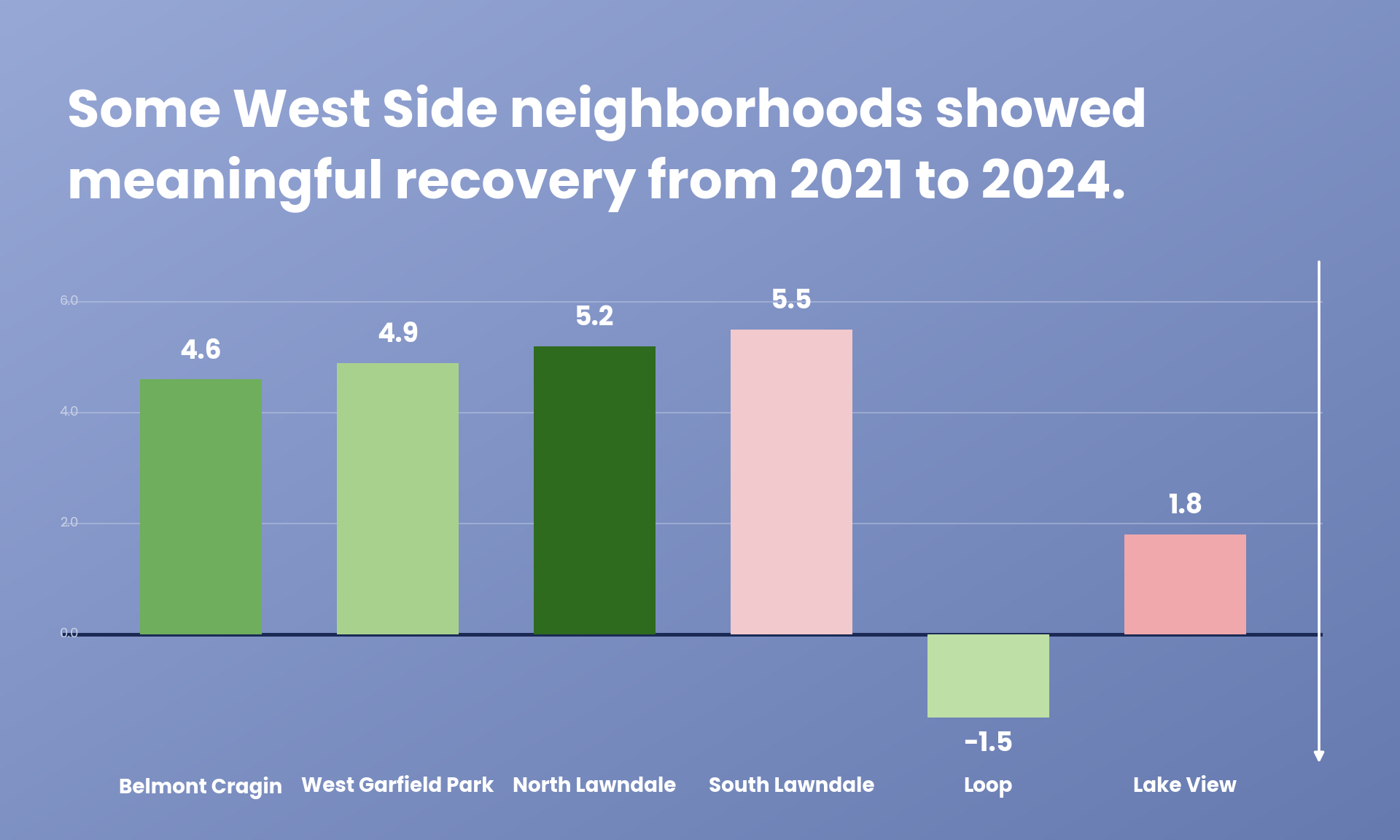
This progress did not happen in just one year. Several West side neighborhoods have seen improvement over multiple years, while life expectancy in other neighborhoods such as the Loop, North Center, and Lakeview has stayed fairly stable. Some of the strongest recoveries happened in communities that experienced the pandemic’s deepest impacts.
Chicago Department of Public Health (CDPH) published a report on the 2024 life expectancy data that provides additional context [3]:
“Overall, life expectancy improved citywide and among nearly every demographic group compared with 2023. The largest increases occurred among populations with the lowest life expectancies. Black males gained 2.1 years, while the Near South and West Sides gained 1.6 and 1.2 years, respectively. ”
CDPH also found that Chicago’s racial life expectancy gap continued to narrow in 2024. While the previous year’s progress was mostly due to fewer COVID-19 deaths, the continued upward trend in 2024 was associated with fewer fatal opioid overdoses and homicides.
These citywide findings offer insight into factors that may be contributing to the recovery. However, we cannot yet pinpoint exactly what is driving this increase on the West Side or how much each factor contributed. The findings suggest that the West Side may not only be recovering from lingering impacts of COVID-19 but also beginning to see meaningful improvements in community health. We need additional years of data to better understand what is driving this progress, how it can be sustained, and where investment is most needed.
A Life Expectancy Gap Has Narrowed, But Not Closed
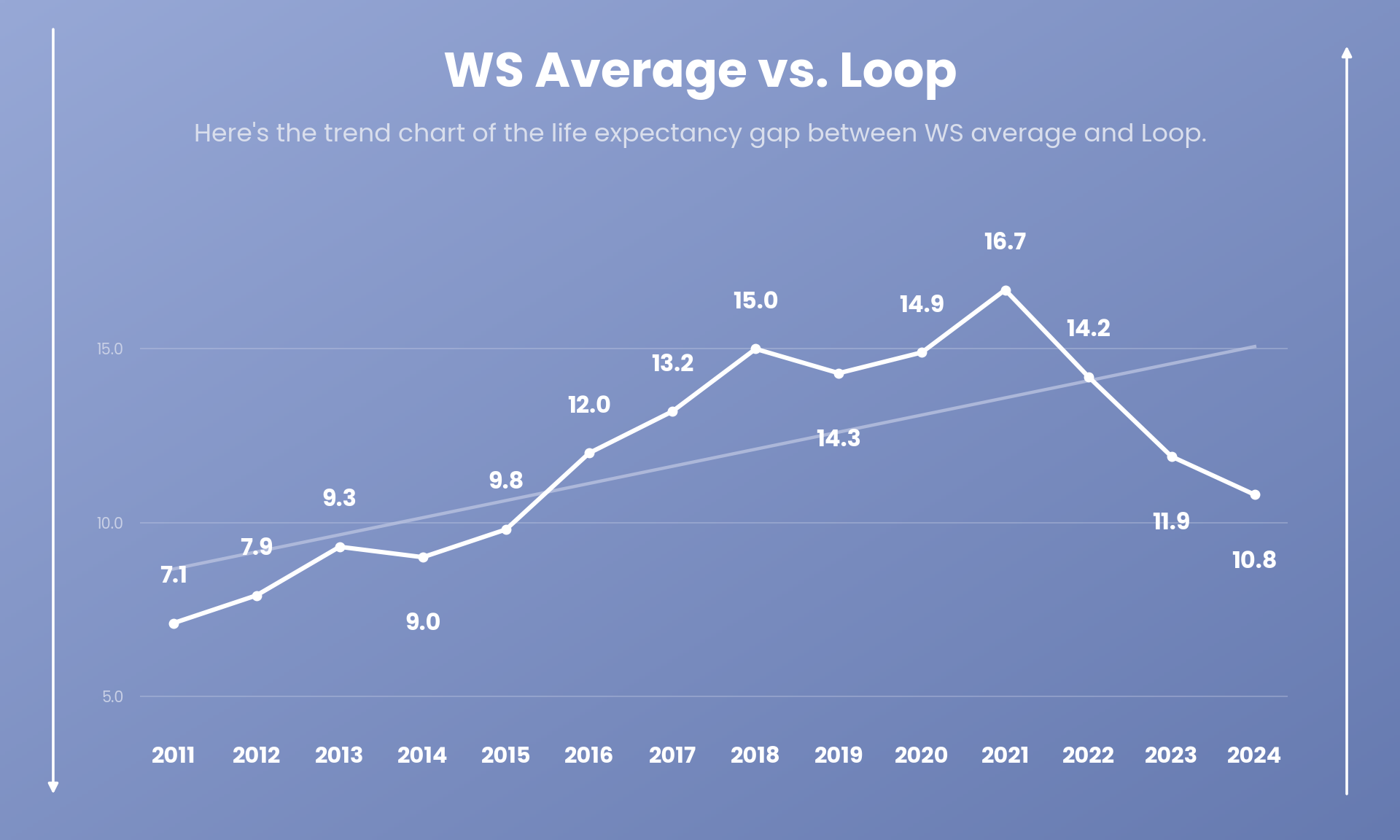
This trend is encouraging; however, we still have a long way to go to close the gap.
In 2024, average life expectancy on the West Side was 10.8 years lower than in the Loop, with the largest gap between West Garfield Park and the Loop at nearly 18 years. The average gap across all neighborhoods has narrowed considerably since 2021, when it reached 16.7 years, but a difference of more than a decade remains far too wide.
Life expectancy is shaped by the conditions in which people live throughout their lives: access to healthcare, safe and affordable housing, quality jobs, nutritious food, education, transportation, and neighborhood safety. Often called the social determinants of health, these conditions reflect decades of decisions about communities: where resources are invested, where they are withheld, and whose well-being is prioritized.
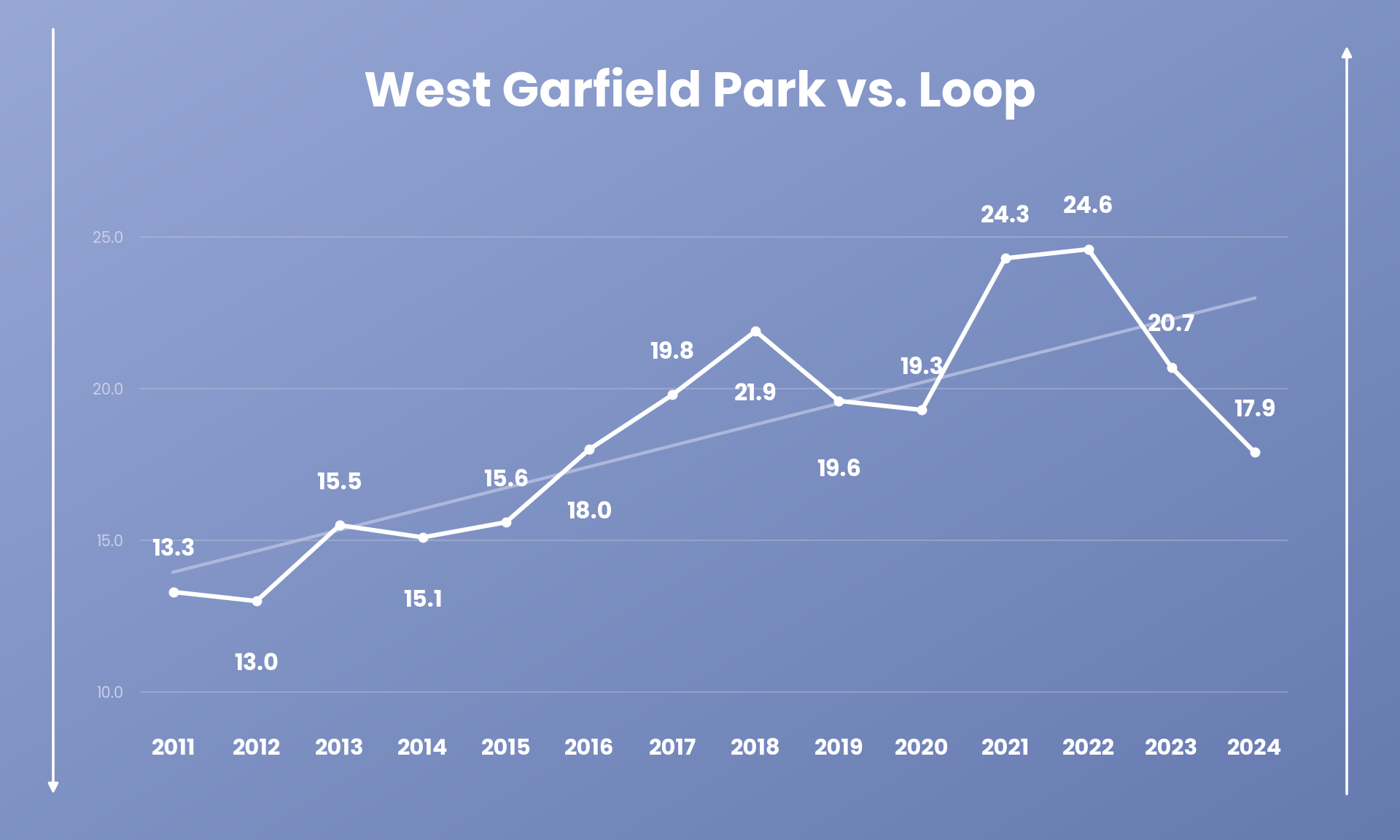
No single program or organization can take credit for changes in life expectancy. Meaningful, lasting progress requires residents, community organizations, hospitals, businesses, government agencies, and funders to work together.

Can We Keep the Progress Going?
These numbers offer reasons for hope; but they also remind us that the work is nowhere near done. West Side neighborhoods still have some of the lowest life expectancies in Chicago, and this is why continued community-driven investment will be essential to keep this progress moving forward.
West Side United will continue tracking life expectancy along with measures related to our Thrive West Side and Live Healthy West Side initiatives. Looking at these measures together will help us understand where progress is taking hold, where inequities remain, and where additional support and investment are most needed.
References:
[1] World Health Organization: COVID-19 eliminated a decade of progress in global life expectancy
[2] University of Minnesota CIDRAP: Life expectancy did not fully return to its pre-pandemic baseline
[3] Chicago Department of Public Health, Data Brief, June 2026.